Sewer Line Repair and Replacement for Casa Grande Homeowners
In Casa Grande, the main under the street belongs to the City, and the pipe from your tap to the house is yours. That split decides who fixes a backup, and getting it wrong costs a day.
If sewage is coming up in a tub or floor drain, stop using water and call. A plumber serving your area can find out whether the blockage is in your line or the City main before anyone digs.
- Licensed and insured plumbers
- Same-day service when available
- 24/7 emergency dispatch
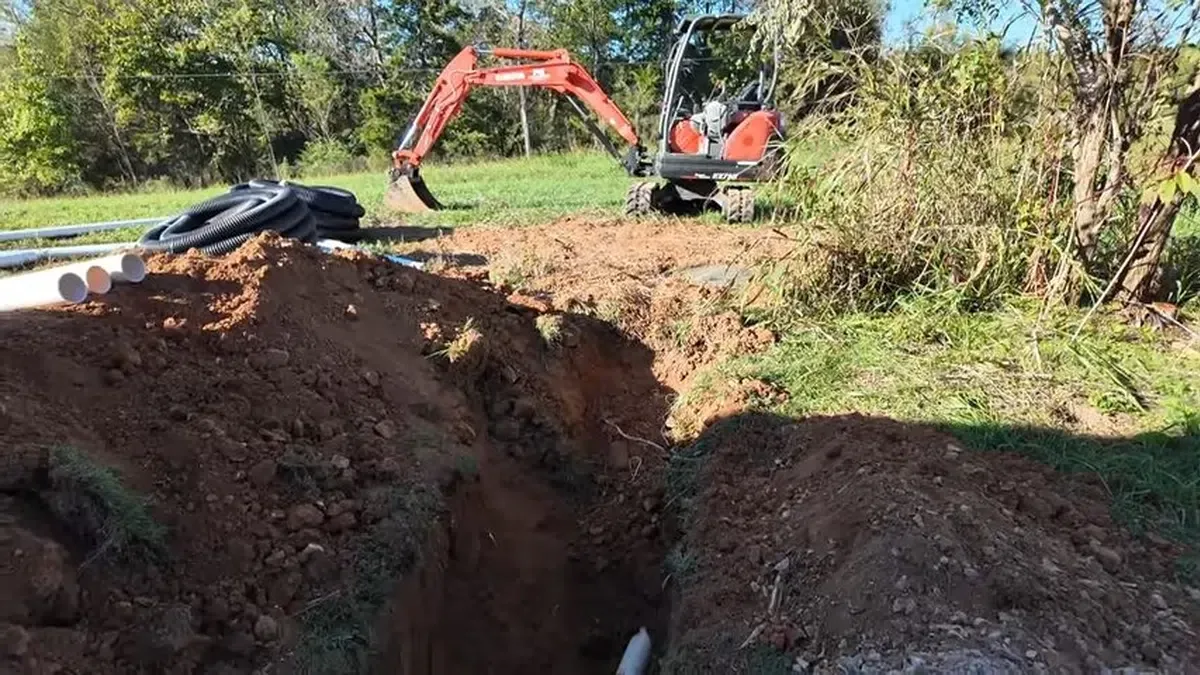
Sewer pipe repair: fixing a section without replacing the line
A repair makes sense when the damage is limited to one spot, such as a cracked joint, a root intrusion or a short offset. The plumber locates the problem with a camera, opens the ground at that point and replaces the failed section.
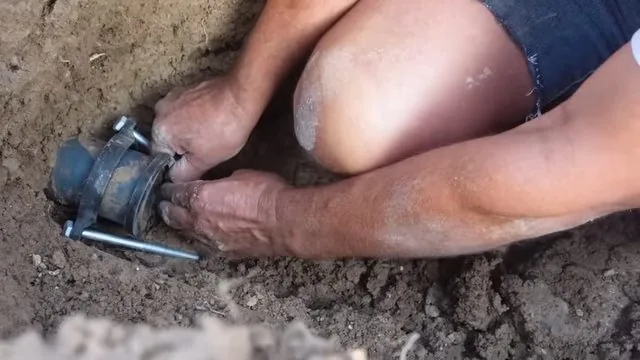
Cast iron, clay and Orangeburg pipe each fail in their own way. Cast iron scales and thins, clay cracks and lets roots in, and Orangeburg, a fiber pipe from the mid-century, deforms and collapses. A camera inspection shows which condition you have.
A sewer leak detection pass with a camera shows whether the line is leaking at a joint, and sewer line leak repair at that joint is often all that is needed. The plumber should lay out the sewer repair options and what each involves. When the damage is spread across the line, sewer system repair done in pieces rarely holds up.
When a failing line has to be replaced
Replacement is the better choice when the camera shows damage over a long run, repeated offsets, or a pipe that is collapsing. A new line removes the pipe as a recurring source of backups.
- Backups that return after every cleaning
- A camera view showing cracks or breaks in several joints
- A section that has lost its slope and holds water
- Roots that come back within months
Clay-rich ground and common caliche, per the Arizona Geological Survey, make for hard digging. A plan should say how much trenching is involved before the work is scheduled.
Arizona 811 wants two working days of lead time before digging, so a replacement is scheduled rather than started on the spot. Ask Building Safety, at 520-421-8630, whether your job needs a permit.
Who owns the lateral: you or the City?
The main under the street belongs to the City of Casa Grande. Everything from the tap to the house is the owner's. A blockage in the main will affect neighbors too, while a blockage in your lateral affects only your house.
| What you notice | Likely location | Who to call |
|---|---|---|
| Several homes on the street backing up | City main | Public Works, 520-421-8625, during business hours; the Police line, 520-421-8700, after hours |
| Only your house backs up | Your lateral | A plumber through dispatch |
| Slow drains that clear and return | Branch line or lateral | A plumber, with a camera look |
Ask the plumber to put a camera into the cleanout. If the line is clear to the property edge and water still backs up, the problem is past it, and the City should hear about it.
Sewage backing up into the house
Stop running water and call. Dispatch routes mainline backups as urgent.
Sewer cleaning to clear a mainline clog
Mainline cleaning, often called rooter service, uses a heavy cable or a water jet fed through the cleanout. It reaches farther than a household auger and can cut roots and flush grease from a long run.
Cleaning is a temporary answer when the pipe is damaged, so insist on a camera view before you pay for another round. Camera footage of the cleared line shows whether it is healthy or only open for now.
A sewage smell near a cleanout, a floor drain or the yard is a warning that the line is partly blocked or that a trap has dried out. Pour water into rarely used drains before assuming a break.
Trenchless lining and pipe bursting
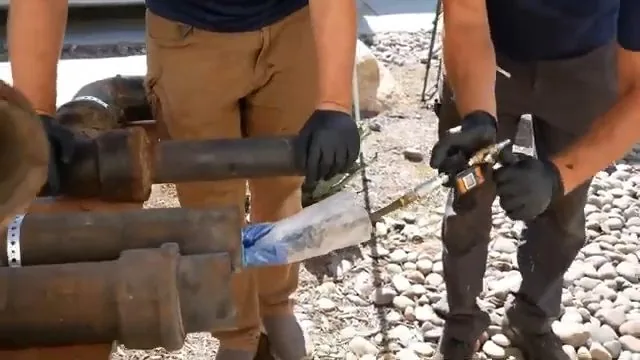
Trenchless methods replace or reline a sewer pipe through small access holes, which spares driveways, patios and landscaping. Lining inserts a resin-saturated sleeve that hardens into a new pipe inside the old one. Pipe bursting pulls a new pipe through the old path while breaking the old one apart.
| Method | Disturbs the yard | Not suited to |
|---|---|---|
| Open trench replacement | Yes, along the full run | Lines under finished slabs or mature trees |
| Pipe lining | Two access pits | Collapsed or badly offset pipe |
| Pipe bursting | Two access pits | Lines with many tight bends |
Trenchless relining and bursting are often compared with open-trench repair, and trenchless versus open trench comes down to the pipe condition. A camera inspection decides which method is available. Do not accept trenchless work without footage showing the pipe is suitable.
Deciding between a repair and a new line
A camera inspection answers it. Call dispatch to book one.
Is a sewer camera inspection worth it?
For a line with repeated backups, yes. A camera shows what a cable cannot: cracks, offsets, root masses, scale and low spots. The footage is also a record you can keep.
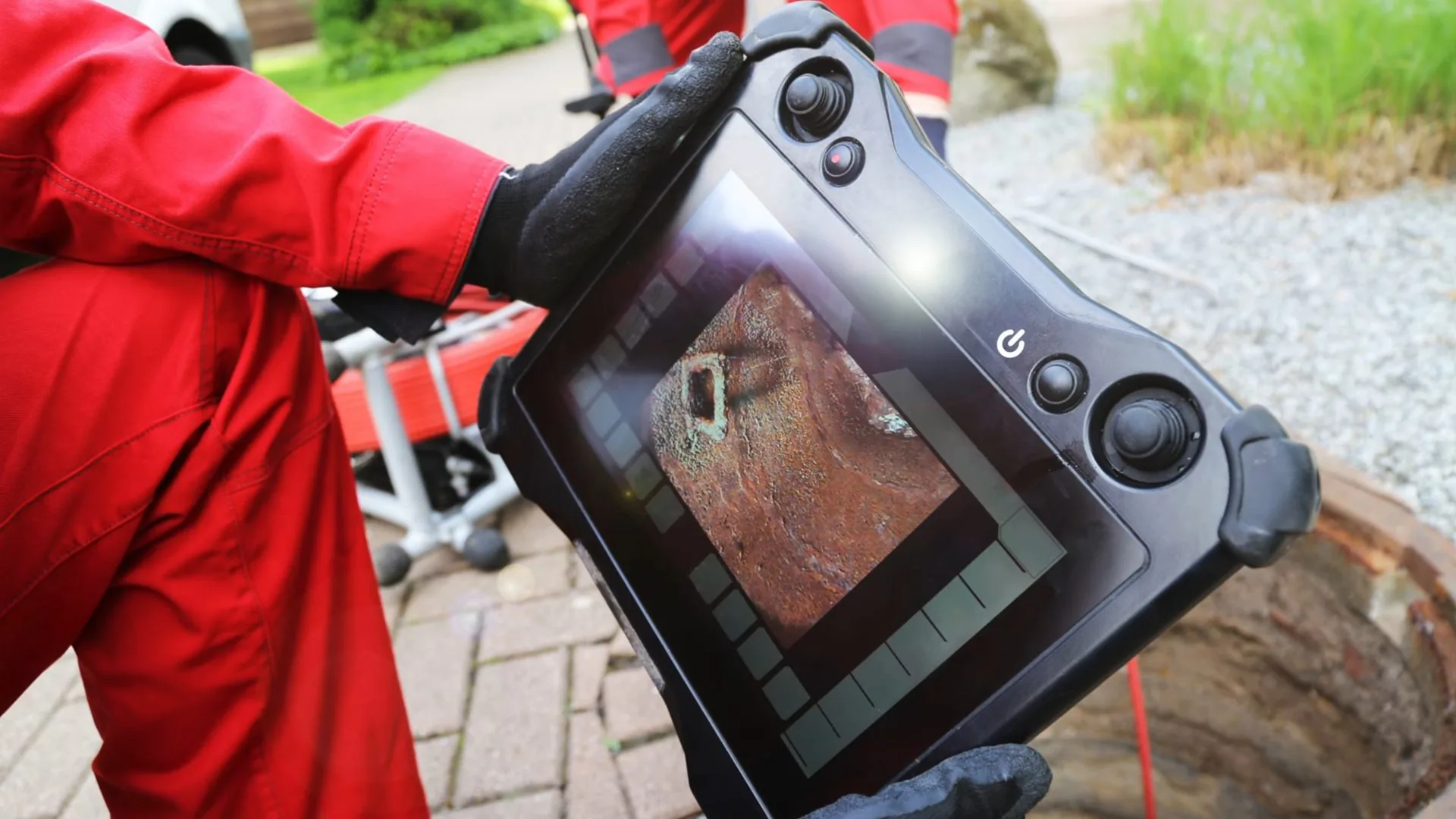
It is also sensible before buying a house. An older property can hide a failing lateral, and the footage shows it before closing, not after.
Sewage smell in the house, gurgling after flushing and slow drains at every fixture are all reasons to request one. A sewer scope takes a short visit, and the plumber can usually review the footage with you on the spot.
Sewer line questions
What causes a main sewer line to clog?
The usual causes are grease, wipes and paper in a line with low spots, and roots entering joints. Symptoms are slow drains at every fixture, gurgling and standing water in the lowest tub or floor drain. A cable clears it for now, and a camera shows the cause.
Trenchless sewer repair or excavation: which is better?
Choose trenchless when the pipe is structurally sound enough to line and you want to keep the yard intact. Choose excavation when the pipe has collapsed, is badly offset or has bellies that need regrading. The camera footage decides, not the preference.
Why does my house smell like sewage?
A dry trap is the most common cause. Run water in rarely used drains for a minute, and the smell often disappears. If it stays, a vent or the line itself may be failing, which is a reason to call.
Is a sewer camera inspection worth doing, and what do I do with it?
Use the footage to decide between cleaning, spot repair and replacement. Ask for a copy. Keep it with your house records, because it also helps when the property is sold.
Who do I call for a sewer backup?
Imagine sewage rising in the tub while the street is quiet. Only your house is affected, so the lateral is likely yours, and a plumber is the call. If neighbors have the same problem, call Public Works on weekdays at 520-421-8625, and use the Police line, 520-421-8700, outside those hours.
Backup, smell or a line that keeps failing
Dispatch is open all night. A licensed and insured plumber serving your area can start with a camera look.
- Licensed and insured plumbers
- Same-day service when available
- 24/7 emergency dispatch